























A day to raise awareness
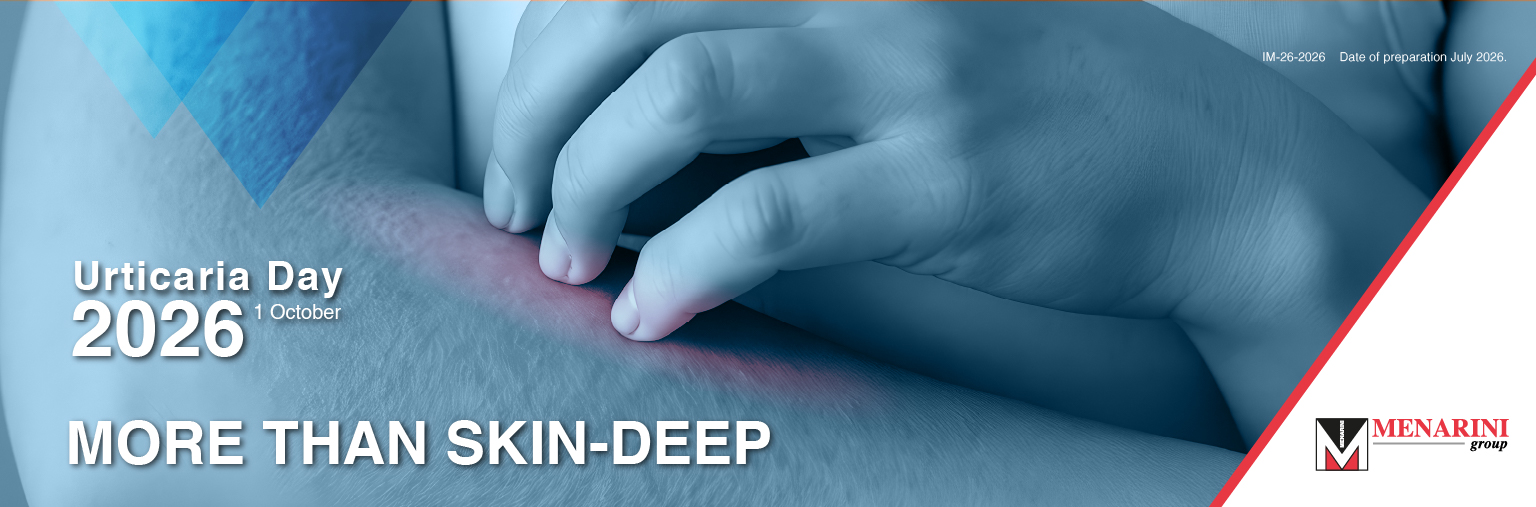
Every year on October, 1st, Urticaria Day (UDAY) raises awareness and greater understanding of urticaria and its impact on the lives of people living with the condition.¹
The theme of UDAY 2026, "Take Back Control – From Itch to Understanding", highlights that urticaria is much more than a skin condition, but can also affect patients’ daily lives and psychological well-being.² By encouraging people to look beyond its visible symptoms, the campaign emphasises the importance of recognising the everyday challenges faced by those living with this disease.³
More than skin-deep
Urticaria, also known as hives, is an inflammatory skin disorder characterised by the appearance of itchy, raised wheals that can develop anywhere on the body.¹,⁴ In some people, swelling of the skin, known as angioedema, may also occur.¹ The duration of symptoms varies. In many cases, wheals resolve within 24 hours, whereas in chronic urticaria symptoms may persist for more than six weeks and recur for months or even years.⁴,⁵ Persistent itch, unpredictable flare-ups and uncertainty about when symptoms may appear can affect sleep, work, social activities and emotional well-being.³ Looking beyond the visible signs is therefore essential to understanding the true burden of the disease.³
A global health burden
Urticaria affects millions of people worldwide. In recent decades, the global burden of the disease has increased, with around 66.5 million cases reported in 2021.⁴ The burden of the disease is higher among females and younger populations, with environmental factors such as air pollution and diet showing a strong correlation with urticaria incidence.⁴
These findings reinforce the importance of raising awareness, improving understanding of the condition and supporting people living with urticaria throughout their journey.
Taking back control together
One of the key messages of UDAY 2026 is that understanding urticaria begins by listening to patients.3
Everyone experiences urticaria differently, and it can be difficult to express that experience during a medical consultation. An open dialogue allows patients to speak freely about their symptoms, concerns, and everyday challenges, while healthcare professionals listen carefully to understand the full impact of the condition.3 This dialogue is the foundation of shared decision-making: when patients feel heard and healthcare professionals understand what matters most to them, treatment choices can be better aligned with their needs and expectations.3
By increasing awareness and encouraging open dialogue, Urticaria Day aims to empower people living with urticaria and contribute to a future in which they feel better understood, better supported and more in control of their condition.¹,³
Menarini Group's commitment to people living with urticaria
At Menarini, we celebrate 15 years of commitment to supporting patients and advancing the understanding of urticaria. Urticaria impacts sleep, daily routines and emotional well-being, and recognizing this broader burden is essential to truly addressing the condition. On Urticaria Day, we reaffirm our dedication to a future where people living with urticaria feel supported, understood, and empowered to take back control of their daily lives.
Sources:
1. Urticaria day. Urticaria day 2026. Available at: https://urticariaday.org/#uday-2026-theme — Last accessed July 2026.
2. Urticaria day. About Urticaria day. Available at: https://urticariaday.org/about-uday-2026/ — Last accessed July 2026.
3. Urticaria day. Key messages. Available at: https://urticariaday.org/key-messages-2026/ — Last accessed July 2026.
4. Tan S, et al. BMC Public Health. 2025;25(1):2709.
5. Urticaria day. What is urticaria. Available at: https://urticariaday.org/about-urticaria-2026/ — Last accessed July 2026.