

























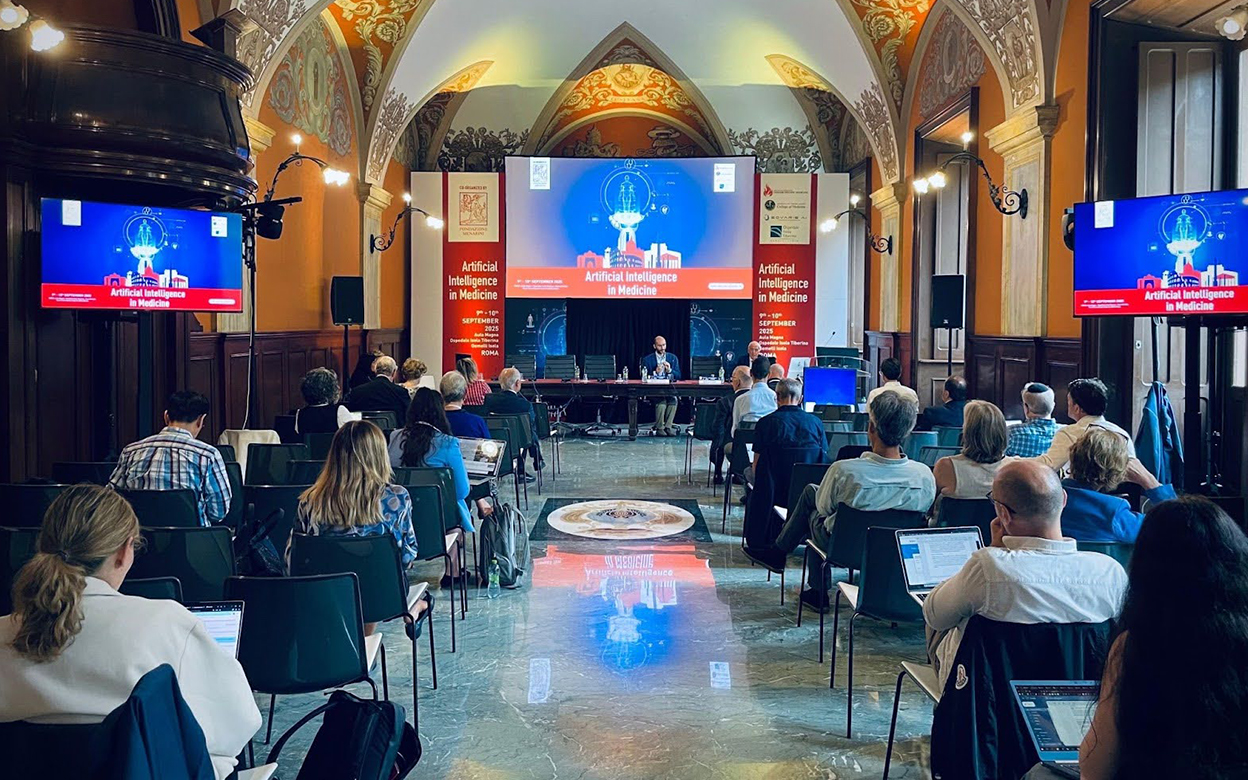
A groundbreaking congress in Rome has highlighted how artificial intelligence is revolutionizing healthcare, offering precision and personalization in complementing – rather than replacing – human medical expertise. The “Artificial Intelligence in Medicine” conference, organized by Fondazione Menarini in collaboration with Gemelli Isola (Isola Tiberina Hospital), University of Central Florida College of Medicine, Sovaris AI, and The Foundation for Gender-specific Medicine, brought together leading experts to explore this transformative technology.
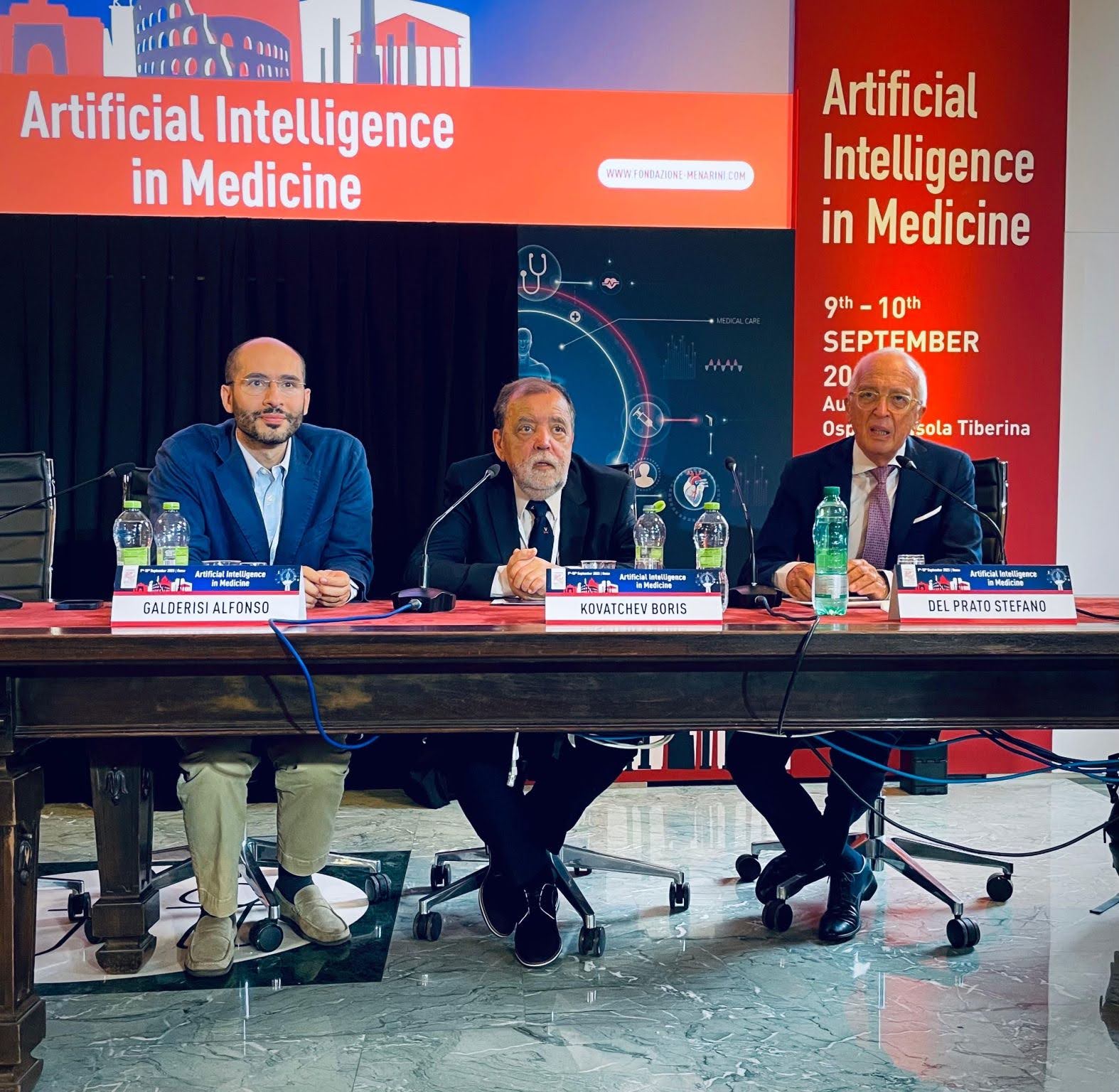 The participants reached a unanimous conclusion: AI serves as a transformative tool that amplifies medical capabilities rather than supplanting healthcare professionals. Stefano Del Prato, President of Fondazione Menarini, crystallized this perspective with compelling clarity: «Success won’t come from artificial intelligence displacing physicians, but from physicians who harness AI’s potential gaining the competitive edge». He pointed out that medicine’s human qualities – compassionate care, intuitive clinical judgment, and meaningful patient connections – cannot be replicated by technology.
Del Prato mapped out the far-reaching impact of AI throughout the medical field, spanning cardiovascular treatment, diabetes care, and pulmonology. The technological horizon stretches beyond current applications to embrace virtual patient replicas, sophisticated surgical planning tools, predictive models for disease outbreaks, and self-directed surgical robotics.
Real-world implementations are reshaping clinical practice today. Within cardiology, AI now plays a crucial role in refining diagnostic capabilities and categorizing patient risk profiles, empowering clinicians to pinpoint individuals susceptible to future cardiac events with remarkable accuracy.
Diabetes management showcases particularly promising innovations: American researchers are testing breakthrough technology that detects insulin secretion abnormalities a decade before type 1 diabetes manifests. Through annual monitoring of these biomarkers, the system can predict disease onset within a two-year window, offering crucial intervention opportunities.
Pulmonology has likewise harnessed AI’s capabilities. Sophisticated sound analysis of respiratory patterns facilitates timely diagnosis and enhanced treatment strategies for a spectrum of disorders, from cystic fibrosis in children to chronic adult conditions such as COPD and pulmonary malignancies.
 However, safeguarding data integrity, defining clinical responsibility, and restructuring medical training constitute major challenges. Privacy protection poses particular concerns, given that AI algorithms depend on extensive medical databases, creating vulnerabilities in patient data confidentiality. Questions of professional accountability grow increasingly intricate when AI platforms generate diagnostic or therapeutic recommendations, establishing clear responsibility frameworks demands thoughtful deliberation.
This ongoing revolution enhances rather than reduces the physician’s significance, fundamentally reshaping their professional identity: medical practitioners must adapt to incorporate these sophisticated technologies with both wisdom and ethical consideration. Medicine’s advancement into this new era hinges on preserving the essential balance between cutting-edge innovation and the irreplaceable human rapport that characterizes exceptional patient care.
Find out more about the event on the Fondazione Menarini website